
If you’ve been around here for any length of time, you know I love traveling for work, for pleasure, and even by myself. However … I also love routines, sleep, digestion, hydration, movement, my own house, and feeling like myself. Unfortunately, travel (especially air travel) can disrupt nearly all of those at once so I prioritize healthy travel habits whenever possible.
Between dry cabin air, pressurization, sitting for hours, airport food courts, circadian disruption, and stress (even the “excited” kind), travel can leave even the healthiest among us feeling bloated, dehydrated, constipated, inflamed, and foggy. And that’s before we even talk about jet lag (which I’ve covered in depth in a separate post here.)
This post reveals several of my favorite tactics to stay healthy while traveling. Let’s start with the most overlooked factor of all!
Hydration: The Airplane Is a Desert at 35,000 Feet
Most airplane cabins maintain humidity levels between 10–20%, compared to the 40–60% we experience at ground level. That is drier than many deserts. The dry air increases insensible water loss, meaning you lose more water through breathing and skin evaporation without realizing it.
Research suggests that passengers can lose approximately 1.5–2 extra liters of water over a long-haul flight, largely through respiratory water loss in low humidity environments. Even on a shorter 3–4 hour flight, measurable dehydration occurs, particularly if caffeine or alcohol is involved.
Dehydration affects:
- Blood viscosity (thicker blood = higher clot risk)
- Cognitive performance
- Fatigue
- Headaches
- Digestion (this is a major contributor to travel constipation!)
Even mild dehydration of just 1–2% body weight loss has been shown to impair mood, attention, and short-term memory.
What does this mean practically?
For a 4-hour flight:
- Aim for at least 8–12 ounces of water per hour
- That’s roughly 32–48 ounces total
- Add electrolytes if you’re prone to headaches, flying longer than 4 hours, or especially active (see this post for more on whether you need electrolytes!)
I bring a reusable water bottle and refill after security. If you board already slightly dehydrated (which most people do), the plane compounds the issue.
I find over and over again that hydration is one of the top reasons people get constipated while traveling. When your body senses dehydration, it pulls water from stool in the colon. The result is harder stool and slower motility that often lasts the whole trip – what a bummer way to start a vacation!
Should You Eat on the Plane?
This is nuanced.
Air travel is mildly inflammatory. Pressurization, immobility, altered oxygen levels, and stress hormones all contribute. Your digestion also slows slightly in flight due to lower atmospheric pressure and stress activation. If you’re flying short-haul and not hungry, I recommend resisting the urge to eat out of boredom and just letting your digestion rest. If you’re flying longer or during a meal window, choose strategically. I prefer to pack food because airport and airplane options often combine refined carbohydrates, low-quality oils, excess sodium, and minimal protein: not a recipe for health success!
My simple travel formula:
Pack at least one from each category:
- A protein (turkey jerky, collagen protein packet, protein bar with clean ingredients, protein powder to mix in water, clean deli turkey rollups, etc.)
- A healthy fat (packets of nuts or nut butter, olives, guacamole, etc.)
- A fiber option (apple, raw vegetables, freeze-dried vegetables, a simple salad – yes, it will go through security)
Combining protein + fat + fiber stabilizes blood sugar and allows you to combine into a meal if needed or eat separately.
Compression Socks: Do They Really Matter?
Yes — especially for flights longer than 4 hours.
Air travel increases risk of venous stasis (blood pooling in the lower extremities). The risk of deep vein thrombosis (DVT) roughly doubles during long-haul flights (>4 hours), particularly in individuals with additional risk factors (age, estrogen use, obesity, prior clot history).
Graduated compression stockings have been shown in studies to:
- Reduce asymptomatic DVT
- Reduce lower leg swelling
- Improve venous return
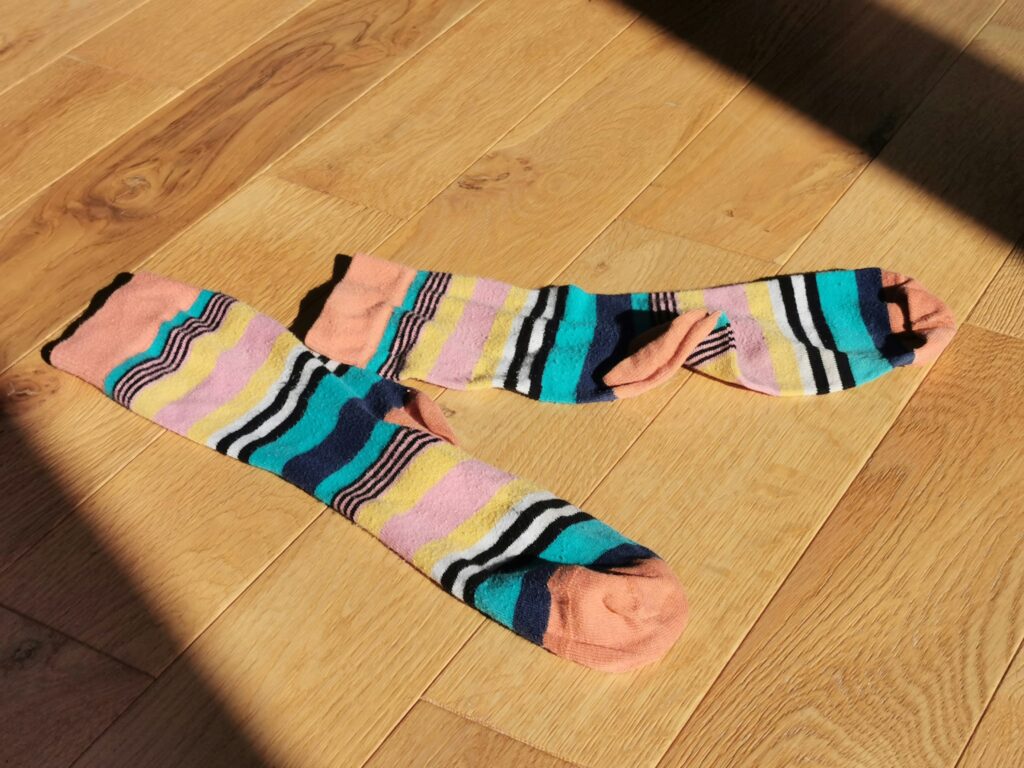
Mild-to-moderate compression (at least 15–20 mmHg) is typically sufficient for healthy travelers. I wear these sleeves on every flight (and often at night while sleeping as well to enhance recovery from workouts!).
Movement and Exercise: Before, During, or After?
I strongly prefer to move before travel (OK, and during and after if I can as well!).
Even a short 20–30 minute workout:
- Improves circulation
- Enhances insulin sensitivity
- Reduces stress
- Improves mood
- Increases nitric oxide production and vascular flexibility (which counteracts the stiffness of prolonged sitting).
During a flight:
- Stand every 60–90 minutes if possible
- Perform ankle pumps and calf contractions
- Rotate shoulders and neck gently
- Take a slow walk down the aisle if appropriate
Even 2–3 minutes of movement matters.
After landing:
A 10-minute walk outdoors accelerates recovery more than you might expect.
Breathing, Nervous System, and Stress Response
Even if you love travel, your nervous system often interprets it as stress. Travel mantes a lot of unpredictability, adrenaline, sensory overload, and even hypervigilance in some.
I meditate for 10 minutes upon takeoff using the Muse app, every single time. That single practice:
- Shifts me from sympathetic to parasympathetic tone
- Reduces cortisol
- Stabilizes heart rate variability
- Improves how I feel when I land
Breathwork during flight can:
- Improve oxygenation
- Reduce anxiety
- Support circulation
Here are some of my favorite patterns of breathwork.
Alcohol and Caffeine in Flight
Remember, I’m just the messenger: both contribute to dehydration.
Alcohol at altitude hits harder because cabin pressure is equivalent to 6,000–8,000 feet. Blood oxygen levels are slightly lower, which can amplify sedative effects.
If you choose to drink coffee or alcohol on a plane:
- Pair each alcoholic or caffeine-containing beverage with 12–16 oz water
- Avoid combining alcohol + dehydration + poor sleep
Immune Support: Airplanes and Viral Transmission
Airplane HEPA filters are actually quite good at filtering circulated air. However, close proximity still increases exposure risk.
Support basics:
- Sleep before travel
- Adequate hydration
- Wash hands after security bins
- Avoid touching face
- Consider nasal saline before and after flights to support mucosal barrier
- Add in propolis spray in the back of your throat a few times per day during travel (code THELYONSSHARE for 25% off!)
Travel stress suppresses immune response more than the airplane air itself, so go back to the point on meditation and breathwork and try some of that as well!
Airport Food: How to Choose Quickly
If I get in a pinch and need to grab food at the airport, I quickly scan for:
- Grilled protein bowls (like Chipotle or other make-your-own option)
- Salads with added protein (if there’s not enough protein or fiber, I may also grab some jerky and an apple, for example)
- Greek yogurt (if tolerated)
- Hard boiled eggs
- Healthier protein bars
- Nuts and fruit
If all else fails, combine a few snack-style items to create a balanced plate.
Digestion: Preventing Travel Constipation
Three key drivers of travel constipation:
- Dehydration
- Immobility
- Schedule disruption
Strategies to combat travel constipation:
- Hydrate super, super well
- Walk after landing
- Magnesium glycinate or citrate (see this post for more on which form of magnesium to take)
- Maintain fiber intake (see this post for benefits and sources of fiber)
The Bigger Picture
I find my clients often getting themselves in an all-or-nothing mentality when it comes to travel. I try to remind them consistently that healthy travel isn’t about perfection, but rather about minimizing unnecessary physiological stress. There will be some factors that detract from your regular routine, and that’s OK.
You cannot eliminate:
- Pressurization
- Cabin dryness
- Sitting
But you can:
- Hydrate appropriately
- Support circulation
- Stabilize blood sugar
- Calm your nervous system
- Protect sleep when possible
- Choose the healthiest food possible given the situation
Travel is a privilege, and I remind myself of that regularly. With a little intentionality, it does not have to detract from your health!
Now it’s your turn … What are your favorite healthy travel tips?

0 Comments