
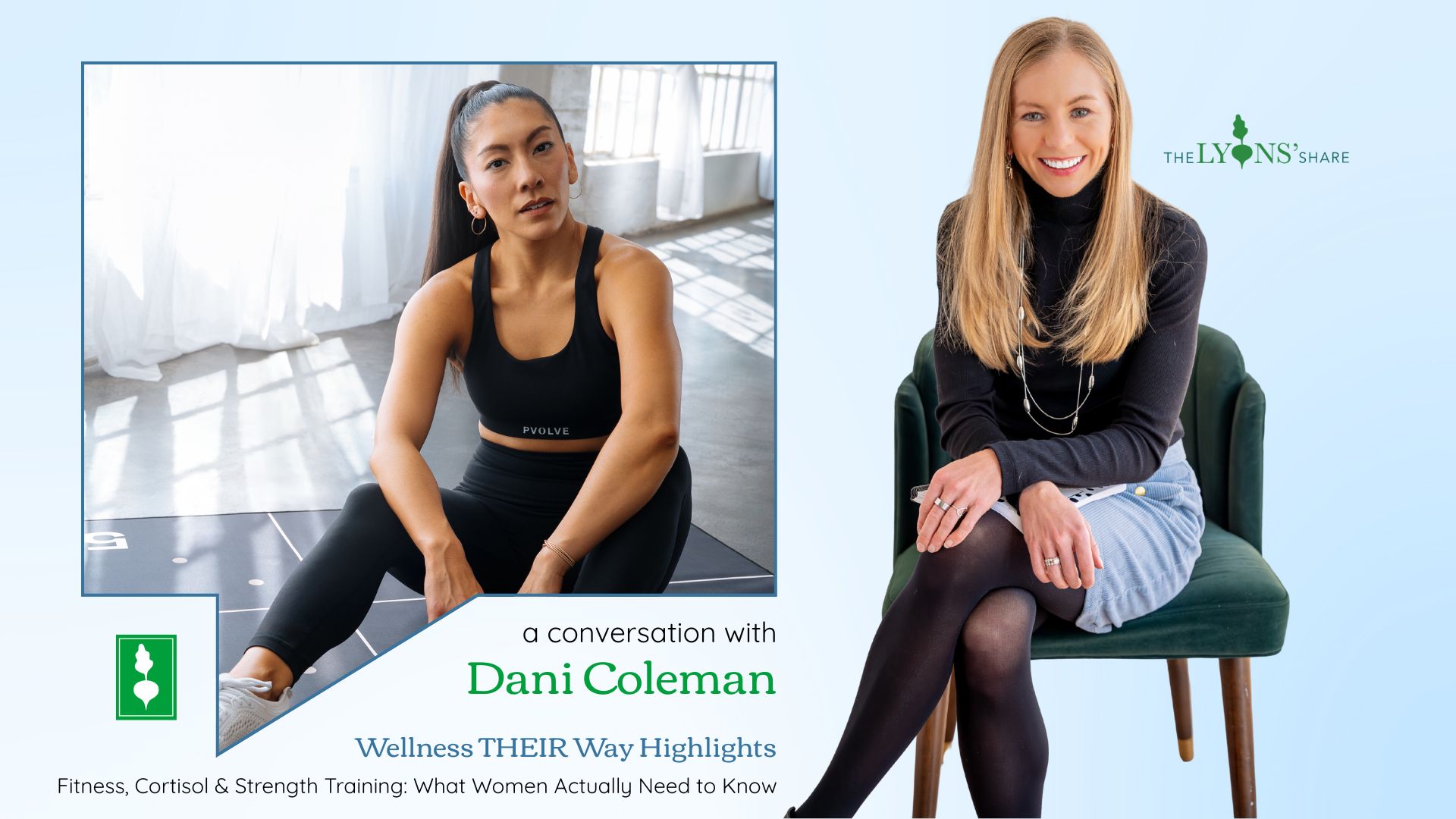
This blog post features a few key takeaways from Dr. Megan’s Wellness Your Way podcast interview with Dr. Dani Coleman where we fitness myths for women about about strength training, recovery, mobility, bone health, overtraining, and the simple habits that help you stay active for life. Find the full episode here and be sure to subscribe to Wellness Your Way so you don’t miss future episodes!
Guest Bio: Dani Coleman
Dani Coleman is the Vice President of Training and Head Trainer at PVOLVE, the clinically proven movement and longevity company focused on strength, mobility, and stability. With more than a decade of experience in the fitness industry, Dani has worked across boutique fitness, personal training, and digital coaching. She is Jennifer Aniston’s trainer and holds multiple certifications in corrective exercise, weight loss, hormone health, and functional movement. Dani is passionate about helping people build sustainable fitness habits that support lifelong health and confidence.
Top Insights from Dani Coleman’s Interview
- High-intensity exercise isn’t inherently bad for cortisol.
Many people fear that HIIT automatically damages hormones, but cortisol isn’t the enemy. Exercise naturally creates an acute rise in cortisol, which helps fuel performance. The concern comes when someone is already living in a chronic state of stress without adequate recovery. The key is looking at your overall stress load—not avoiding challenging workouts altogether. - Recovery is just as important as the workout itself.
Exercise only creates the stimulus for adaptation. The real improvements happen during recovery. Quality sleep, proper nutrition, hydration, stress management, and rest days all determine whether your workouts help or hurt your body over time. - Strength training will not make most women “bulky.”
One of the biggest myths in fitness continues to discourage women from lifting weights. Building significant muscle mass requires years of highly specific training, intentional calorie surpluses, and consistent progressive overload. For most women, resistance training leads to improved body composition, stronger bones, increased metabolism, and better long-term health—not unwanted bulk. - Consistency beats intensity every time.
Many people believe every workout has to leave them exhausted or sore to be effective. Instead, Dani encourages focusing on workouts that you can consistently perform week after week. Sustainable movement habits produce far better long-term results than occasional all-out efforts. - Mobility and stability deserve as much attention as strength.
Strength alone isn’t enough. Maintaining joint mobility, balance, and movement quality allows you to move well throughout life while reducing injury risk. These often-overlooked components become even more important as we age. - Walking is one of the most underrated health tools.
One of Dani’s favorite recommendations is surprisingly simple: take a walk after meals. Post-meal walks can help regulate blood sugar, improve energy, support digestion, and provide an easy way to increase daily movement without adding intense exercise. - More exercise isn’t always better.
Overtraining doesn’t just show up as sore muscles. Signs may include:
-
- Trouble sleeping
- Feeling “wired but tired”
- Declining workout performance
- Irregular menstrual cycles
- Constant fatigue
- Dreading workouts you normally enjoy
Sometimes the healthiest choice is taking a rest day.
- Nutrition plays a huge role in recovery.
Exercise and nutrition work together. Adequate protein supports muscle repair, while hydration, electrolytes, and micronutrients all contribute to recovery and reduced soreness. Fueling properly allows your body to adapt to training more effectively. - Trendy fitness tools shouldn’t replace the fundamentals.
From vibration plates to rucking, wellness trends continue to gain popularity. While these tools may have value as additions to an already solid routine, they shouldn’t replace foundational habits like resistance training, regular movement, quality nutrition, and recovery. - Train for the life you want decades from now.
Perhaps the most inspiring message of the conversation is shifting the goal of fitness away from appearance. Every workout is an investment in future independence, stronger bones, healthier joints, better balance, and the ability to continue doing the activities you love later in life. Longevity isn’t built through perfection—it’s built through consistent movement over many years.
Want to hear the full episode, including tips on strength training, recovery, identifying overtraining, and so much more?
Check out the podcast episode here!

0 Comments